
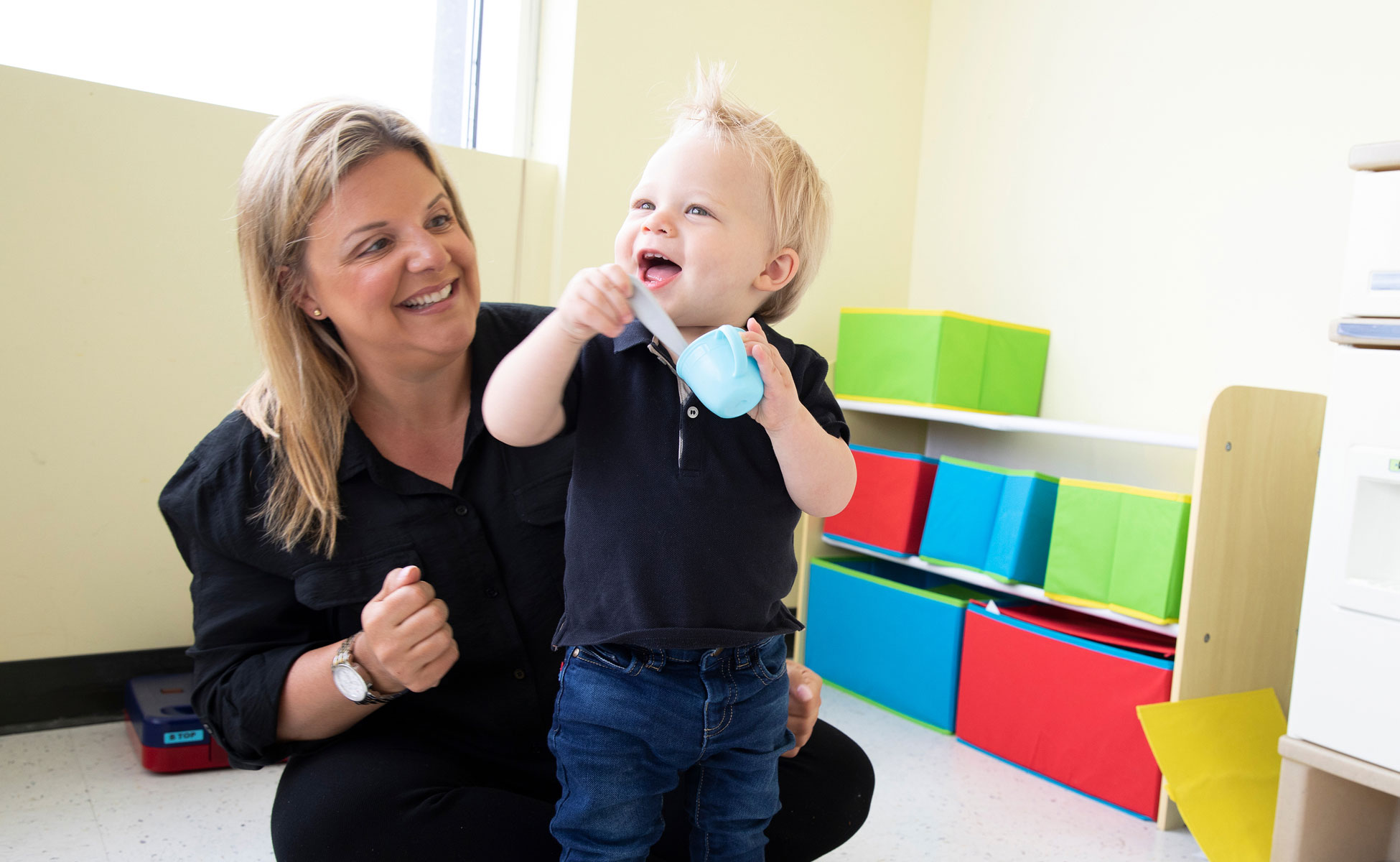
As a therapist you will need to customize interventions to meet each individual’s needs at home, in the community and/or at school. Our curriculum is designed to help you learn the skills necessary to be confident in developing customized intervention plans.
The 36-credit master’s program can be completed in four semesters.
What You’ll Learn
You'll learn strategies for increasing desired behaviors while decreasing undesired behaviors; how to set long and short-term objectives designed to teach skills in academic areas, communication, socialization, self-care, play and motor skills; and how to break down goals into manageable steps and assesses them through ongoing progress measurement.
Behavior analysis is a data-driven field that uses empirically supported methods to help individuals on the autism spectrum, and our curriculum focuses on studying, interpreting and applying the data and interpreting current research and studies on the topic.
Online or On Campus
You can complete your coursework online, at your own convenience, or at our centrally located Manhattan campus. Or a mix of the two, taking some classes online and some on campus, as it works for your schedule. Whichever option you choose, you can expect rich and dynamic discussions to take part it, challenging assignments to help you understand how to implement what you’re learning, and responsive, knowledgeable faculty.
Our ABA Training Model
The program integrates coursework, supervised practicum, and applied research to ensure development of competencies in assessment, intervention design, data-based decision making, ethical practice, and professional communication. The model ensures you’ll graduate prepared for certification and independent practice as behavior analysts.
Practicum Training Experiences
As a student in the M.S. in Applied Behavior Analysis you’ll complete supervised practicum experiences in applied settings that may include educational environments (e.g., schools and special education programs), clinical settings (e.g., ABA clinics and early intervention programs), and community-based service agencies. Practicum placements are designed to provide direct experience in the application of behavior-analytic principles across diverse populations and service delivery contexts.
All practicum experiences include supervision provided by qualified behavior analysts in accordance with BACB requirements. You’ll receive ongoing supervision focused on assessment, intervention implementation, data collection, ethical practice, and professional skill development. Practicum sites are selected based on their ability to provide appropriate opportunities for applied behavior analytic service delivery and alignment with program training objectives.
Research and Thesis Experience
The program includes a structured, three-semester research and practicum sequence (PSGN 705, 730, and 731) designed to integrate applied research with field-based training.
In PSGN 705, you’ll develop a research proposal grounded in applied behavior analysis, including literature review, research question development, operational definitions, measurement systems, and single-case experimental design selection, with emphasis on ethics and feasibility.
In PSGN 730, you’ll begin implementation of your approved proposal within supervised practicum sites, including data collection and intervention implementation with ongoing supervision and treatment fidelity monitoring.
In PSGN 731, you’ll complete data analysis, finalize your thesis, and defend your work, demonstrating integration of research and applied practice.
This sequence ensures systematic engagement in applied research embedded within practicum training.
